Boredom: Friend or Foe?
Boredom can make us crueler and less happy, but it may also clean the brain, sharpen our sense of time, and spark creativity.

You’re bored. You turn to your phone, laptop, or the insects crawling on the windowsill to relinquish you from this state of nothingness. However, should you really be squashing boredom at every opportunity? Truth be told, the answer is multifaceted and not as black and white as you would like it to be. To understand this, it is worth examining both the benefits and drawbacks of boredom. Boredom is associated with positive effects such as increased creativity, understanding of the concept of time, and the cerebrospinal fluid (CSF) cleansing of the brain. On the other hand, boredom is also linked to unhappiness, emotional eating, and feelings of meaninglessness. In short, boredom is complicated, as it is both a biologically necessary process and an interesting catalyst for different social behaviors.
Boredom was once thought to be insignificant to study or address. However, in recent years, it has been found that boredom may play an adaptive role in cognitive and behavioral regulation alongside its ability to improve one’s integration in society and subsequent thriving nature¹. Boredom is defined as the mental state of being without internal or external stimulation². Several models exist for explaining the purpose of boredom through means of attention, homeostasis, and cognitive resources. The Meaning and Attentional Components (MAC) model posits that boredom is a result of the discrepancy between one’s actions and goals (meaning), and between cognitive demands and available attention³. It proposes that boredom serves as a deliberate launching pad from which people derive new goals and desires⁴. For example, if one feels frequently bored at their current job, they might daydream of other jobs that would be more interesting to them. This would cause them to pivot directions and explore their other interests more.
The cognitive homeostasis model proposes that boredom is evidence of engagement falling outside of the desired range, driving us to seek regulation of our engagement to reestablish the homeostatic range, with chronically bored people having unrealistically high standards of the excitement of their activities⁵.
The Boredom Feedback Model (BFM) states that boredom is a signal that one is not fully utilizing one's cognitive resources, thus causing one to seek further engagement externally. One pursues new tasks either internally through mind-wandering and creative endeavors such as different projects or hobbies, or externally by returning focus towards the original task⁶. This optimal range of engagement is said to be the state in which one is neither under nor overstimulated. Rather, they have the optimal level of stress and engagement to keep them active and interested in their activities without having them become overwhelmed. This functionality shows how boredom is evolutionarily advantageous. It is a means to push us out of dull and repetitive situations, bolstering our creativity and propelling us in life through exploring different professional, social, or personal goals⁴. With all of these models, it is difficult to arrive at a definitive conclusion on whether boredom is positive or negative.
Negatively speaking, boredom is responsible for various uncomfortable situations. It has been shown to increase the likelihood of sadistic or harmful behaviors under certain experimental conditions. Sadistic tendencies are more pronounced in those with a predisposition for boredom in their daily lives. However, it was demonstrated that artificially increasing boredom without alternatives also increased participants’ sadistic tendencies, such as killing worms and destroying other peoples’ pay. When alternatives were presented, such as a more interesting video to watch, boredom increased sadistic tendencies more so in those with naturally high sadism⁷.
In the experiment regarding killing worms, participants were asked to watch a 20-minute video of either a waterfall (the boredom paradigm) or a documentary about the Swiss Alps (the control condition) with the opportunity to place a cup containing a worm in a modified coffee grinder; there was a barrier on the blender that would not place the worm in contact with the blades, but participants were not aware of this at the time of the experiment. The overwhelming majority of participants did not elect to grind the worms. However, when boredom was induced through having participants watch the waterfall video, there was a significant increase in the number of participants who placed the worms in the grinder. Similarly to this experiment, participants in a separate online study were randomly assigned to watch a 5-minute video of stone (boredom condition) or a 5-minute video of two magicians doing two magic tricks (control condition). They were told that they were paired with a real person receiving 50 cents. During the video, they were given periodic choices to either increase or decrease the person’s pay by 10-cent increments, a version of the “joy of destruction” game. Between those who watched the stone video and those who watched the video of the magicians, there was a significant increase in the number of participants who elected to destroy the other person’s pay, showing that boredom not only correlates with an increase in sadistic behavior, but actively causes it⁷.
Boredom is further thought to increase emotional eating in those with poor interoception (the ability to recognize internal cues)⁸. Additionally, an increase in one’s tendency towards boredom has correlated with a decrease in their undergraduate GPA⁹. Moreover, proneness to boredom is linked with an increase in problematic phone use, defined as the inability to control one’s phone use and one’s phone use subsequently leading to negative impacts on their mental and physical health, causing increases in one’s anxiety and depression symptoms¹⁰.
Boredom also makes people think about things that aren’t happening with nearly the same frequency as they think about things that are happening, i.e. mind wandering. The researchers used an iPhone app to ask a large number of people what they were doing at random points throughout the day, whether they were thinking of something other than what they were doing, and whether that thing was pleasant, neutral, or unpleasant. They found that people thought of something other than what they were doing (let their mind wander) during every activity except for when they were making love. These participants were also no happier thinking about other pleasant things than they were thinking about their current task. Ultimately, this pattern of thinking makes people unhappy as it makes them no happier to let their mind wander than it does to think about their current state and activities¹¹. While these are all negative effects, they are largely due to a lack of alternative activities during lapses of boredom. Alternative activities can deter one from resorting to problematic behaviors for quenching boredom, such as excessive phone use and even sadism.
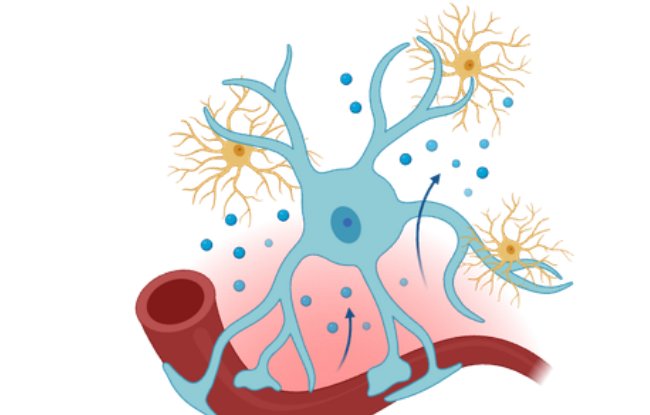
Positively speaking, there are many effects of boredom. Firstly, boredom may be the brain’s attempt at recovering lost sleep and its associated byproduct clear-out. It’s been found that at the onset of boredom, there is an influx of cerebrospinal fluid (CSF). CSF is produced to cleanse excess waste products from the brain following a period of sleep deprivation¹². Furthermore, boredom is hypothesized to contribute to one’s discovery of the concept of time. In life, people are forced to ponder the reasons why they are not receiving the influx of information they may have expected at any given moment, i.e., why they are bored. This leads the mind to ascribe such reasons to the “container” of experiences: time. Thus, one goes from being unaware of time to gaining an awareness of time and its passage, causing further uses and/or abuses of time at one’s own discretion¹³. Similarly, boredom and its counterpart, effort, influence how we perceive time by how boring or engaging a task is. It manages this through the insular cortex, the brain region responsible for the awareness of one’s internal states, homeostasis, and emotion. This balance of effort and boredom emerges through familiarity with tasks: new, higher-effort tasks seemingly slow time while easy, monotonous tasks seemingly speed up time¹⁴.
Furthermore, boredom is associated with a rise in creativity. When prompted to think meaningfully, participants were either completely unable to, or unable to do so pleasurably¹⁵. The study in question asked participants to think for pleasure and for meaning, the methods for which will be described in that order. For the first portion, the researchers either provided no guidance on what to think about or examples of meaningful things to think about, such as one’s first kiss, academic or personal accomplishments, prior achievements, or family events, which have been shown to be meaningful to those who think about them¹⁶. The participants who did not receive examples showed a nominal (but not statistically significant) increase in the extent of meaningfulness they experienced, but those who received examples did find the task of thinking to be both more enjoyable and more meaningful. In the second portion, the participants were asked to specifically think for meaning. This resulted in a decrease in their enjoyment, as it is posited that more meaningful thoughts may be related to more negative events, such as the memorial service for a loved one¹⁵. Across the two studies, we can see that people do enjoy thinking about positive events, and feel even more enjoyment when given prompts of such positive thoughts, although the inverse correlation in enjoyment is found when they were unpromptedly asked to think meaningful thoughts. This implies that with exposure to and training in enduring boredom, people can successfully learn how to use their creativity and imagination to form pleasing thoughts.
Through these studies, it has been shown that boredom is a double-edged sword. While boredom causes uncomfortable feelings and a lack of stimulation, it isn’t necessarily a bad thing. Boredom can contribute to the understanding and realization of new concepts, such as time, and can stimulate creativity and imagination. Boredom may also be the brain’s defense mechanism for clearing itself of waste during the day if one is sleep-deprived and could not do so during the night. In addition, boredom may also be the catalyst for pleasing thoughts when one is prompted and permitted to think positively. Boredom is a foe if we make it out to be one, but a friend if we accept it for what it is.
References (16)
- Danckert, J., & Elpidorou, A. (2023). In search of boredom: beyond a functional account. Trends in cognitive sciences, 27(5), 494–507. https://doi.org/10.1016/j.tics.2023.02.002
- Ndetei, D. M., Nyamai, P., & Mutiso, V. (2023). Boredom-understanding the emotion and its impact on our lives: an African perspective. Frontiers in sociology, 8, 1213190. https://doi.org/10.3389/fsoc.2023.1213190
- Westgate, E. C., & Wilson, T. D. (2018). Boring thoughts and bored minds: The MAC model of boredom and cognitive engagement. Psychological review, 125(5), 689–713. https://doi.org/10.1037/rev0000097
- Bench, S. W., & Lench, H. C. (2013). On the function of boredom. Behavioral sciences (Basel, Switzerland), 3(3), 459–472. https://doi.org/10.3390/bs3030459
- Trudel, C., Risko, E. F., Eastwood, J. D., Van Tilburg, W. a. P., Elpidorou, A., & Danckert, J. (2025). Boredom signals deviation from a cognitive homeostatic set point. Communications Psychology, 3(1), 22. https://doi.org/10.1038/s44271-025-00209-6
- Tam, K. Y. Y., Van Tilburg, W. a. P., Chan, C. S., Igou, E. R., & Lau, H. (2021). Attention drifting in and out: The Boredom Feedback model. Personality and Social Psychology Review, 25(3), 251–272. https://doi.org/10.1177/10888683211010297
- Pfattheicher, S., Lazarević, L. B., Westgate, E. C., & Schindler, S. (2021). On the relation of boredom and sadistic aggression. Journal of personality and social psychology, 121(3), 573–600. https://doi.org/10.1037/pspi0000335
- Ahlich, E., & Rancourt, D. (2022). Boredom proneness, interoception, and emotional eating. Appetite, 178, 106167. https://doi.org/10.1016/j.appet.2022.106167
- Mugon, J., Boylan, J., & Danckert, J. (2020). Boredom Proneness and Self-Control as Unique Risk Factors in Achievement Settings. International journal of environmental research and public health, 17(23), 9116. https://doi.org/10.3390/ijerph17239116
- Elhai, J. D., Vasquez, J. K., Lustgarten, S. D., Levine, J. C., & Hall, B. J. (2018). Proneness to Boredom Mediates Relationships Between Problematic Smartphone Use With Depression and Anxiety Severity. Social Science Computer Review, 36(6), 707-720.
- Killingsworth, M. A., & Gilbert, D. T. (2010). A wandering mind is an unhappy mind. Science, 330(6006), 932. https://doi.org/10.1126/science.1192439
- Yang, Z., Williams, S. D., Beldzik, E., Anakwe, S., Schimmelpfennig, E., & Lewis, L. D. (2025). Attentional failures after sleep deprivation are locked to joint neurovascular, pupil and cerebrospinal fluid flow dynamics. Nature Neuroscience, 28(12), 2526–2536. https://doi.org/10.1038/s41593-025-02098-8
- Pöppel, E. (2024), Boredom as a gateway for the discovery of time as a concept. PsyCh Journal, 13: 345-346. https://doi.org/10.1002/pchj.771
- Wolff, W., Özay-Otgonbayar, S., Danckert, J., Bieleke, M., & Martarelli, C. S. (2025). Effort and boredom shape our experience of time. Neuroscience and biobehavioral reviews, 178, 106375. https://doi.org/10.1016/j.neubiorev.2025.106375
- Westgate, E. C., Wilson, T. D., Buttrick, N. R., Furrer, R. A., & Gilbert, D. T. (2021). What makes thinking for pleasure pleasurable? Emotion, 21(5), 981–989. https://doi.org/10.1037/emo0000941
- Raza, S., Westgate, E. C., Buttrick, N. B., Heintzelman, S., Furrer, R. A., Gilbert, D. T., Libby, L. K., & Wilson, T. D. (n.d.). A trade-off model of intentional thinking for pleasure. Emotion (Washington, D.C.). https://pubmed.ncbi.nlm.nih.gov/34941322/