Spring 2026 / Reward & Addiction
Rewired: Addiction and How It Rewires the Brain
Addiction doesn't hijack the brain so much as rewire it, and the same plasticity may be the key to recovery.
What is addiction? What do we consider a state of addiction? Of course, the first things that come to mind are hard substances such as drugs and alcohol. But activities like gambling are also often classified as addictive acts. You could even get addicted to adrenaline! As a neurological condition, addiction is defined as “a chronic and relapsing disorder marked by specific neuroadaptations predisposing an individual to pursue substances irrespective of potential consequences,” (Neurobiology of Addiction, Semaan, Khan). This definition emphasizes that addiction is a chronic, relapsing condition that is shaped by specific neuroadaptations. This paper navigates the way addiction rewires the brain by exploring how different drug dependencies change the brain's reward system, how these habits form, and the role neuroplasticity plays in all of this.
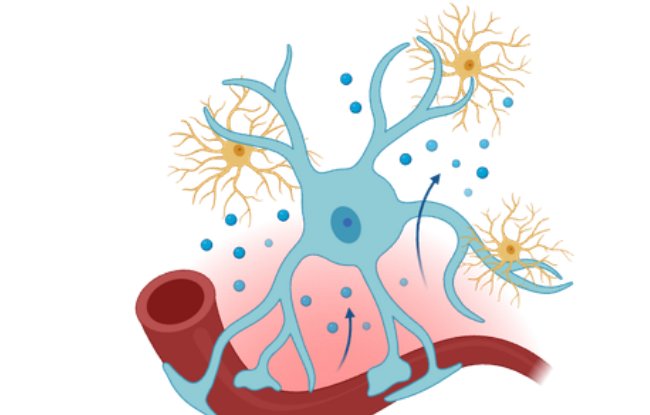
Most addictions target the dopaminergic (DA) reward system. It is first important to understand that most goal-directed motivations are learned. According to studies, “it is primarily through its role in the selective reinforcement of associations between rewards and otherwise neutral stimuli that DA is important for such motivation,” (Dopaminergic reward system: a short integrative review, Oscar Arias-Carrion). Key parts of the dopaminergic reward system include specific pathways that connect to the ventral tegmental area (VTA), nucleus accumbens, and prefrontal cortex.
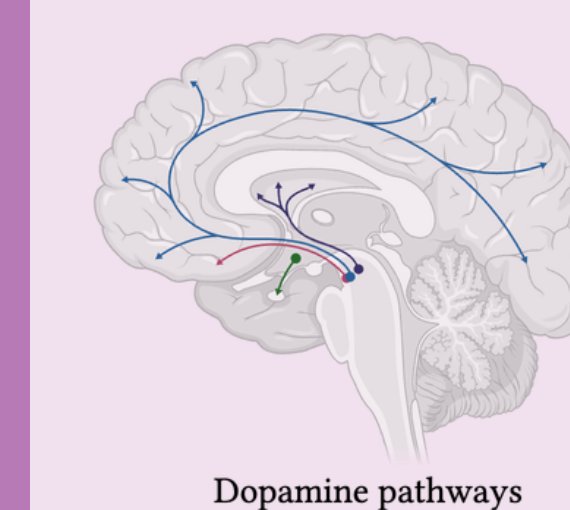
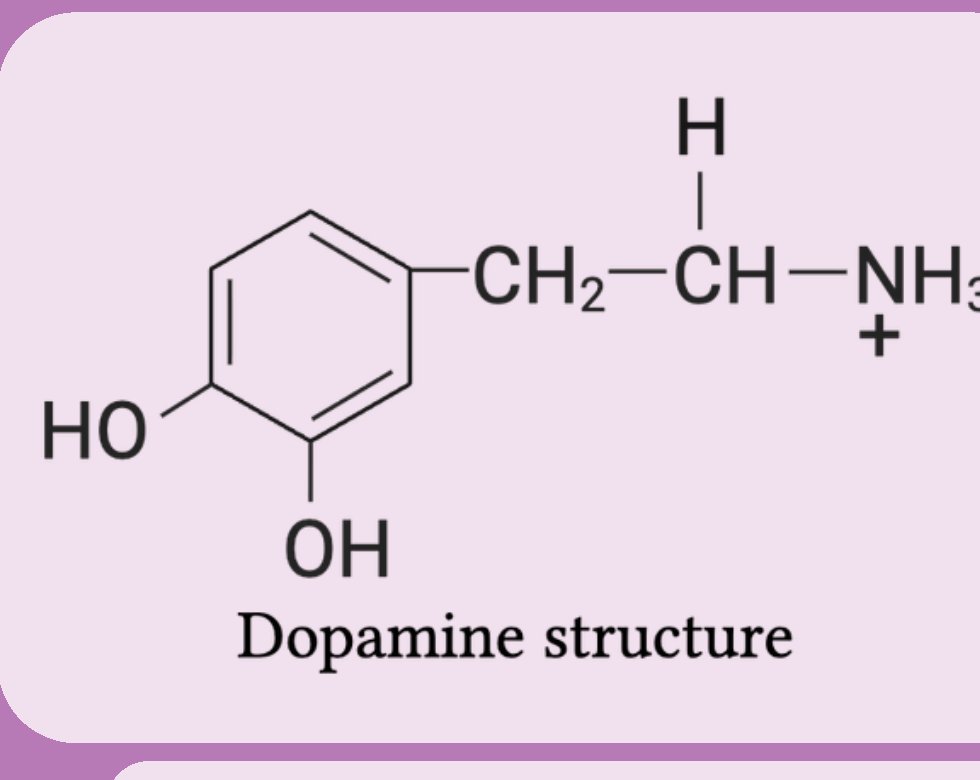
How do natural amounts of the neurotransmitter contribute to pleasurable feelings? According to the Cleveland Clinic, “Dopamine is part of your reward system..designed, from an evolutionary standpoint, to reward you when you’re doing the things you need to do to survive. As humans, our brains are hard-wired to seek out behaviors that release dopamine in our system,” (Cleveland Clinic). This balanced amount of dopamine in our system evolved to keep us alive, as it serves to release pleasure from activities necessary for survival. However, high levels of the neurotransmitter are usually characterized by feelings of euphoria and increased energy, as well as “poor impulse control” and “being more aggressive” (Cleveland Clinic). Addiction is usually characterized by this higher dopamine level.
The role that dopamine plays in reward circuitry is often referenced in how “addictive drugs share the common property of enhancing the effect of midbrain DA function…” (Dopaminergic reward system: a short integrative review, Oscar Arias-Carrion). Because most addictive drugs are characterized by their ability to enhance the effects of dopamine, the feelings usually connected with a reward are further enhanced when drugs come into the system. Many addictive drugs can fall into the dopamine reuptake inhibitor category. These prevent dopamine from re-entering and being reabsorbed by the nerve cell that released it. This makes more dopamine available to more neurons in your brain.” (Cleveland Clinic). Dopamine reuptake inhibitors are very useful in treating depression and narcolepsy. (Cleveland Clinic). When prescribed and monitored by a practicing and licensed physician or psychiatrist, these inhibitors can be very helpful to patients and are a good medical tool when used correctly.
On the other hand, when these dopamine reuptake inhibitors are used incorrectly, it intensifies the reward system. It does so by artificially increasing the amount of dopamine the brain senses through signaling. This creates the heightened sense of reward that usually comes from a more basic natural place. The brain starts to associate this euphoric sense with the drug, and this association leads to the formation of habits and dependency on the drug.
While the initial feeling has already been discussed, addiction is ultimately a chronic, recurring behavior that can be explained by synaptic plasticity.: Plasticity is the brain’s ability to strengthen or weaken certain connections between neurons, which is key to learning and memory. There has been a focus on how most drugs target the mesocorticolimbic dopamine (DA) system, but it is important to note how this also impacts other areas of the brain. For example, the glutamatergic and GABAergic synapse transmissions that occur around these areas are heavily involved in the DA system. Studies show that drug-evoked synaptic plasticity “outlasts the presence of the drug in the brain and contributes to the reorganization of neural circuits…with repetitive drug exposure, they may add up and cause addictive behavior.” (Drug-evoked synaptic plasticity in addiction: from molecular changes to circuit remodeling, Christian Luscher). It is this repeated exposure and strengthening of these specific pathways that are key when it comes to understanding how addictions form.
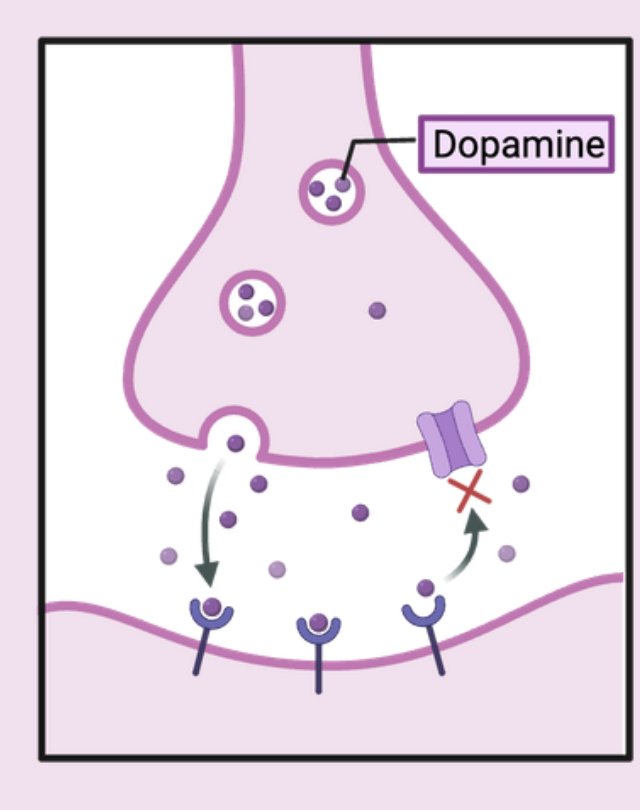
To delve further into the mechanism of addiction, cocaine has been the focal point of most literature. Cocaine is a dopamine reuptake inhibitor, which causes a build-up of dopamine and a perceived sense of euphoria. Over time, with chronic cocaine abuse, the brain starts to rely on a high amount of dopamine. This means that, over time, the user needs more of the drug to achieve the same euphoric high felt during the first use.
Addiction is often described as “hijacking the brain”, but this is not the most accurate definition of what is occurring. Although behaviorally, it makes sense to call it a “hijack” due to the way it compromises decision-making, the biology behind it goes a bit further. Rather than actually changing the anatomy of the brain, “what happens in addiction is…, natural processes involved in all learning, the brain prunes nerve pathways of attention and motivation to preferentially notice, focus on, desire and seek the substance.” (Addiction and the Brain, Psychology Today).
In short, addiction does not physically reshape the brain so much as it rewires its pathways, altering patterns of attention, motivation, and behavior. Research is still ongoing, but at the end of the day, addiction is not simple but rather a summation of many experiences, sensations being encoded all at once, and signals getting crossed. In theory, if neuroplasticity allows the brain to change in ways that support addiction, it may also be the mechanism that helps the brain recover and regain control. By leveraging the brain's ability to adapt, advances in treatment aim to restore balanced signaling and rebuild healthy neural pathways.
References (5)
- Arias-Carrión, Oscar, et al. “Dopaminergic Reward System: A Short Integrative Review - International Archives of Medicine.” SpringerLink, BioMed Central, 6 Oct. 2010, link.springer.com/article/10.1186/1755-7682-3-24#Sec7_91.
- Semaan, Abdo. “Neurobiology of Addiction.” StatPearls [Internet]., U.S. National Library of Medicine, 2 Nov. 2023, www.ncbi.nlm.nih.gov/books/NBK597351/#:~:text=Continuing%20Education%20Activity,individual%20to%20the%20addiction%20cycle.
- “PubMed.” National Center for Biotechnology Information, U.S. National Library of Medicine, https://pmc.ncbi.nlm.nih.gov/articles/PMC4046255/pdf/nihms270282.pdf. Accessed 17 Apr. 2026.
- “Addiction and the Brain.” Psychology Today, Sussex Publishers, www.psychologytoday.com/us/basics/addiction/addiction-and-the-brain. Accessed 17 Apr. 2026.
- Uncited professional, Cleveland Clinic medical. “Dopamine: What It Is, Function & Symptoms.” Cleveland Clinic, 19 Dec. 2025, my.clevelandclinic.org/health/articles/22581-dopamine.